Acetabular Fracture
- See Also
- Epidemiology
- Incidence: 3-6% of Pelvic Fractures in the U.S.
- Pathophysiology
- Mechanism
- High energy Trauma (e.g. Motor Vehicle Accidents, fall from height)
- Older patients with ground level falls
- Images
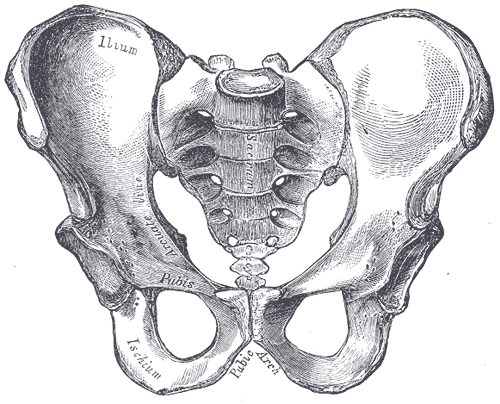
 Lewis (1918) Gray's Anatomy 20th ed (in public domain at Yahoo or BartleBy)
- Exam
- See Primary Trauma Survey
- See Secondary Trauma Survey
- Complete extremity neurovascular exam
- Findings
- Hip or inguinal pain
- Inability to bear weight
- Limb deformities including shortening or rotation
- Local hip swelling or Ecchymosis
- Imaging
- Pelvic XRay
- Often included as part of initial Trauma Evaluation
- Judet Views
- Obturator oblique xray (acetabular anterior column, posterior wall)
- Iliac oblique xray (acetabular Posterior Column, anterior wall)
- CT Pelvis (with or without 3D reconstruction)
- Preferred evaluation to define Fracture orientation, fragments (ideal for preoperative planning)
- Types
- Judet and Letournel System
- Elementary Fracture Patterns
- Posterior Wall Pattern (common)
- Isolated posterior acetabular wall Fracture
- Associated with posterior Hip Dislocation
- Posterior Column Pattern (common)
- Fracture through ischium and extending into posterior acetabulum
- Anterior Wall Pattern
- Isolated anterior acetabular wall Fracture
- Anterior Column Pattern
- Fracture through iliopubic region (but sparing Posterior Column)
- Transverse Pattern
- Horizontal Fracture line through the acetabulum (divides the acetabulum into superior/inferior halves)
- Fracture line passes through both the anterior and Posterior Columns
- Posterior Wall Pattern (common)
- Associated Fracture Patterns (complex combinations and variants)
- T-Shaped Pattern
- Both-Column Pattern (anterior and posterior)
- Articular surface is completely detached from the axial skeleton
- Neither acetabular column (anterior or posterior) is attached to the Sacrum
- Anterior column (or wall) with posterior hemitransverse pattern
- Anterior column or wall Fracture AND a transverse Fracture through the Posterior Column
- Transverse with posterior wall pattern
- Transverse Acetabular Fracture AND a posterior wall Fracture
- Posterior Column with posterior wall pattern
- Posterior Column AND wall Fracture
- Management
- Hip stability
- Performed under Anesthesia and fluoroscopy
- Instability identified if hip subluxation or dislocation during passive range of motion (or Hip Joint incongruity)
- Surgery
- Timing
- Typically in first 72 hours for best outcomes (first 12 hours if associated Hip Dislocation)
- Indications
- Unstable Fractures
- Displaced or incongruent Acetabular Fractures
- Acetabular Fractures with Hip Dislocation
- Intraarticular Fracture fragments
- Techniques
- Timing
- Nonoperative Management
- Indications
- Stable, non-displaced and congruent Fractures
- Approach
- Protected weight bearing
- Close interval follow-up with serial imaging
- Indications
- Complications
- Post-Traumatic Osteoarthritis
- Heterotropic ossification
- Avascular Necrosis of the Femoral Head
- Associated neurovascular injury
- Prognosis
- Varies by Fracture Type, associated femoral Head Injury, patient factors (e.g. age, comorbidity)
- Best outcomes with elementary Fracture patterns and quality reduction
- Resources
- Acetabular Fractures (StatPearls)
- References
- Tran (2025) Crit Dec Emerg Med 39(8): 25-6